When an emergency happens, you rarely get much warning. A sudden flood, house fire, prolonged power cut or severe weather event can quickly turn an ordinary day into a situation where you need to leave home at short notice.
It is something most of us would rather not think about. However, being prepared doesn't mean expecting the worst. It simply means having a plan and knowing that, should something happen, you have the essentials ready to go.
One of the simplest and most practical steps you can take is to prepare an emergency go bag.
Sometimes called a grab bag, evacuation bag or bug out bag, this is a portable collection of essential supplies designed to help you manage if you need to leave your home quickly. It should contain the things you are most likely to need during the first 24 to 72 hours away from home.
In this guide, we'll look at what to include in an emergency go bag in the UK, how to organise it, and some of the easily overlooked items that could make a real difference when you need them most.
What Is an Emergency Go Bag?
An emergency go bag is a pre-packed rucksack or holdall containing essential supplies that you can grab quickly if you need to evacuate your home.
Unlike a large survival stockpile designed for staying at home during an emergency, a go bag is intended to be portable. You should be able to pick it up and leave without having to spend valuable time searching for equipment, medication or important documents.
There are several situations where having one could prove useful in the UK:
- Flooding: Rising water levels may require you to evacuate your property at short notice.
- House fires: You may need to leave immediately, with no opportunity to collect belongings.
- Severe weather: Storms, snow and extreme weather can disrupt transport and essential services.
- Major power outages: Extended disruption could affect heating, communications and access to everyday necessities.
- Local emergencies: Industrial incidents, gas leaks or other major incidents may require temporary evacuation.
The important thing to remember is that an emergency go bag isn't intended to replace a household emergency stockpile. Ideally, you should have both: supplies at home for periods of disruption and a portable bag ready if you need to leave. See our guide to what to include in a UK emergency kit for the household essentials.
Choosing the Right Emergency Go Bag
Before thinking about what goes inside, you need a suitable bag.
A comfortable, durable rucksack is generally the best option. Something in the region of 30–40 litres will provide a reasonable amount of storage for an individual, although the ideal size depends on your circumstances and how much equipment you need to carry.
Look for the following features:
- Comfortable, adjustable shoulder straps.
- A padded back panel.
- Multiple compartments for organising equipment.
- Durable, water-resistant material.
- Strong zips and reliable stitching.
- A waist or chest strap to distribute weight.
You don't necessarily need an expensive military-style backpack. A good-quality hiking rucksack will usually do the job perfectly well.
Consider using waterproof dry bags or sealed pouches inside the rucksack to protect important documents, clothing and electronic equipment. Even a water-resistant bag can struggle during prolonged exposure to heavy rain or flooding.
Most importantly, make sure everyone who might need to use the bag knows where it is kept.
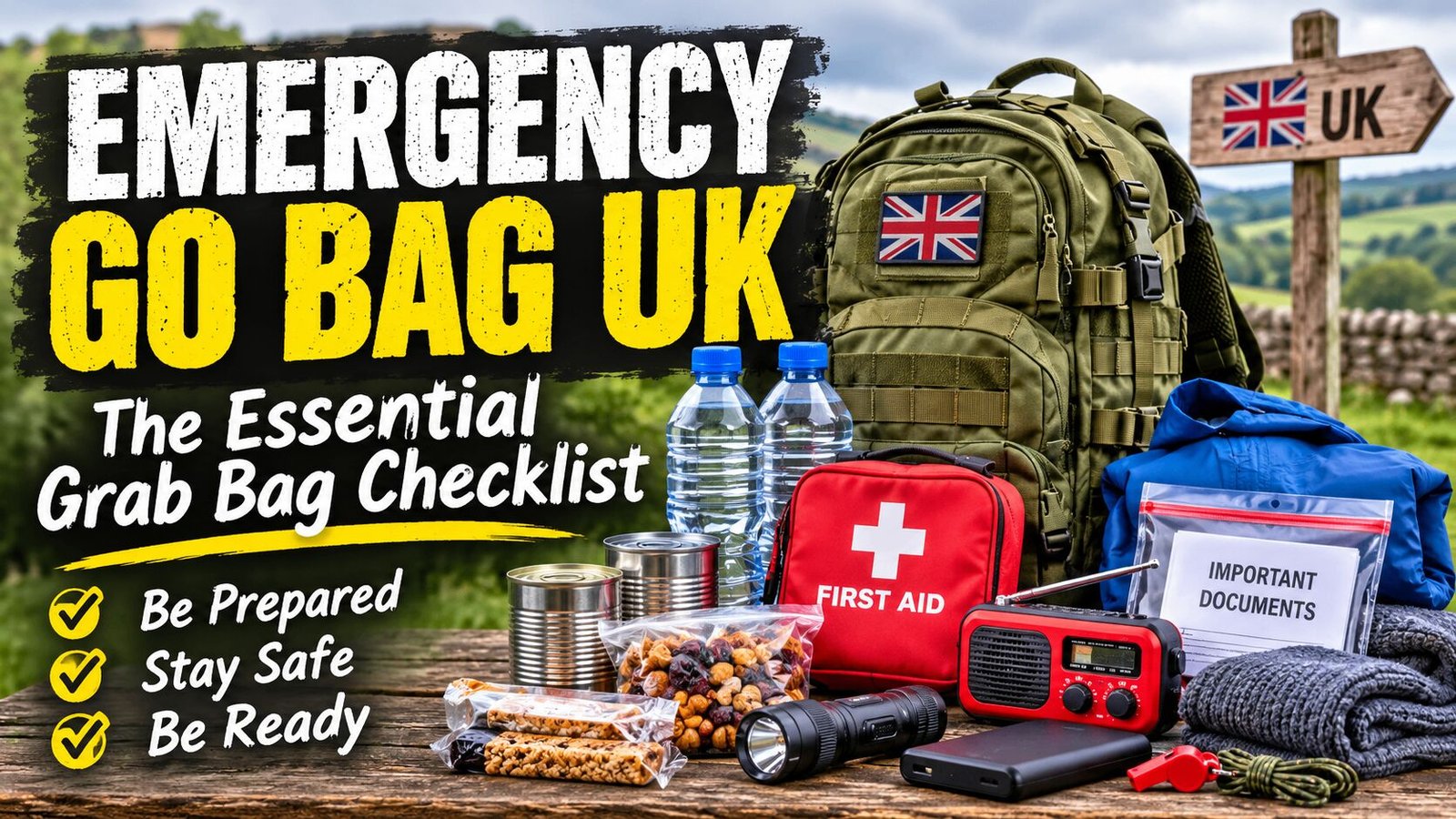
The Essential UK Emergency Go Bag Checklist
There is no single perfect go bag. Your requirements will depend on your household, location, medical needs and the types of emergencies you are preparing for.
However, the following items provide a sensible starting point.
1. Water and Hydration
Water should be one of your highest priorities.
Without access to clean drinking water, even a relatively short emergency can become uncomfortable and potentially dangerous.
Consider including:
- Bottled drinking water.
- A reusable water bottle.
- A compact water filter suitable for the water sources you may encounter.
- Water purification tablets, where appropriate.
UK emergency preparedness guidance recommends around 2.5–3 litres of drinking water per person per day. Carrying a full three-day supply in a rucksack, however, would add considerable weight.
For this reason, keep your go bag stocked with a manageable amount of water and have a separate household water supply. A suitable filtration or purification option can provide additional flexibility, but remember that not every filter removes viruses or chemical contamination.
Never assume water from a stream, river or floodwater is safe to drink. Read more about making water safe to drink in an emergency and how much emergency water to store.
2. Emergency Food Supplies
You don't need a week's worth of expedition rations in your go bag. What you need is lightweight, nutritious food that can be stored for extended periods and eaten without cooking.
Good options include:
- Energy and cereal bars.
- Trail mix and nuts.
- Dried fruit.
- Biscuits and crackers.
- Tinned food with ring-pull openings.
- Ready-to-eat meals.
- High-energy snacks.
Pay attention to food allergies and dietary requirements within your household.
I would also recommend choosing food you actually enjoy eating. During a stressful situation, familiar food can be a welcome comfort.
Remember to check expiry dates and rotate supplies regularly. For supplies at home, see how much food a UK household should store for emergencies.
3. First Aid and Medical Supplies
A basic first aid kit is an essential part of any emergency go bag.
You don't need an extensive medical kit, but you should have enough to deal with minor injuries and everyday medical requirements.
Consider including:
- Assorted adhesive plasters.
- Sterile dressings and gauze.
- Medical tape.
- Antiseptic wipes.
- Disposable gloves.
- Bandages.
- Scissors and tweezers.
- Pain relief medication.
- Antihistamines, if appropriate.
- Any essential prescription medication.
If you or someone in your household takes regular medication, make sure you have an appropriate emergency supply and copies of relevant prescriptions.
Don't forget spare glasses, contact lenses, hearing aid batteries or any other essential medical equipment.
For anyone with a medical condition, this section deserves particular attention. A go bag is only useful if it contains the supplies you genuinely depend on. Our guide to building a practical home medical kit covers further first aid planning.
4. Clothing and Protection From the Elements
British weather can be unpredictable at the best of times. In an emergency, being wet, cold or exposed to the elements can make an already difficult situation considerably worse.
Pack clothing appropriate for the season, including:
- A waterproof jacket.
- Spare socks and underwear.
- Comfortable walking trousers.
- A warm fleece or jumper.
- Hat and gloves.
- A spare T-shirt.
- Lightweight waterproof trousers.
- Comfortable walking shoes or spare footwear.
An emergency foil blanket is inexpensive, lightweight and takes up very little space.
If you have room, consider a compact sleeping bag or lightweight bivvy bag.
Remember that staying warm and dry is about more than comfort. It can help reduce the risk of hypothermia, particularly during colder months.
5. Lighting and Emergency Communication
When normal services are disrupted, reliable communication becomes extremely important.
Your mobile phone will probably be your main source of information, but you shouldn't rely on it exclusively.
Include:
- A reliable LED torch.
- Spare batteries, if required.
- A fully charged power bank.
- Appropriate charging cables.
- A battery-powered or wind-up radio.
- A spare set of charging adapters, where useful.
A small wind-up or battery-operated radio is particularly valuable. If mobile networks or internet services become unavailable, a radio may still allow you to receive local and national emergency information.
Remember to check which local radio stations provide emergency updates and keep their frequencies written down.
Also make sure your power bank is regularly charged. An emergency battery that has been sitting unused for twelve months may not be much use when you need it. Explore more off-grid emergency communication options and our guide to portable power banks and backup power.
6. Important Documents and Emergency Information
This is one of the most overlooked parts of an emergency go bag.
If you need to leave home quickly, having access to important information can make a significant difference.
Consider keeping waterproof copies of:
- Passport details.
- Driving licence.
- Home and vehicle insurance information.
- Important medical information.
- Emergency contact details.
- Copies of essential household documents.
You don't necessarily need to carry original documents. Secure copies are generally a more sensible option.
It is also worth keeping a written list of important telephone numbers.
We increasingly rely on smartphones to store contact details, but what happens if your phone runs out of battery or is damaged?
A simple paper list could prove surprisingly useful.
7. Cash and Essential Everyday Items
Cash might seem like an old-fashioned addition to an emergency bag, but it remains useful.
During a power outage or communications failure, card payment terminals and cash machines may not work.
Keep a modest amount of cash in a secure waterproof pouch. A mixture of notes and coins is sensible.
Other useful everyday items include:
- Spare house and vehicle keys.
- A small notebook and pen.
- Whistle.
- Multi-tool, where appropriate and lawful.
- Duct tape.
- Hand sanitiser.
- Wet wipes.
- Tissues and toilet paper.
- Basic toiletries.
- Face masks.
- Bin bags.
These are relatively inexpensive additions that could make an uncomfortable situation considerably easier to manage.
Don't Forget Children, Pets and Vulnerable Family Members
An emergency go bag should reflect the needs of everyone in your household.
If you have children, consider including:
- Nappies and baby wipes.
- Formula and feeding equipment.
- Children's medication.
- Spare clothing.
- Familiar snacks.
- A small comfort toy.
- Essential identification and contact information.
If you have pets, prepare a separate compact pet emergency kit containing:
- Pet food and treats.
- Water and a portable bowl.
- Lead, harness or carrier.
- Waste bags.
- Any essential medication.
- Copies of vaccination records.
- A recent photograph of your pet.
Don't assume that an evacuation centre will automatically provide everything your pet needs.
Similarly, anyone with mobility difficulties, disabilities or additional medical requirements may need specific equipment or assistance. Plan for these needs before an emergency occurs.
Organising Your Go Bag Properly
Packing everything into a rucksack is one thing. Being able to find it quickly when you need it is another.
I recommend dividing your equipment into clearly organised sections using smaller waterproof bags or packing cubes.
For example:
- Medical pouch: First aid equipment and medication.
- Food pouch: Snacks and emergency food.
- Communication pouch: Chargers, power bank and radio accessories.
- Document pouch: Waterproof copies of important information.
- Clothing pouch: Spare clothes and thermal items.
Keep frequently needed items near the top of the bag or in easily accessible pockets.
You should also consider keeping a small torch and whistle somewhere immediately accessible rather than buried underneath everything else.
The aim is simple: you should be able to find what you need without emptying the entire bag.
How Often Should You Check Your Emergency Go Bag?
Preparing your go bag is not a one-off exercise.
Food expires, batteries lose charge, clothing requirements change and family circumstances evolve.
I recommend reviewing your emergency go bag at least every six months.
During each check:
- Check food and medication expiry dates.
- Recharge power banks.
- Test torches and radios.
- Replace used or damaged first aid supplies.
- Check clothing still fits.
- Update emergency contact details.
- Review documents and insurance information.
- Adjust supplies for seasonal weather.
It is also worth reviewing the bag whenever there is a significant change in your household, such as a new baby, a change in medication or the addition of a pet.
A bag that was perfectly suitable two years ago may no longer meet your needs.
Emergency Go Bag vs Bug Out Bag: What's the Difference?
You'll often hear the terms emergency go bag and bug out bag used interchangeably, but there is a slight distinction.
An emergency go bag is generally designed for short-term evacuation. It contains practical essentials to help you manage for the first 24–72 hours while you reach somewhere safe.
A traditional bug out bag may be designed around a much longer period of self-sufficiency, potentially including more extensive shelter, cooking, navigation and survival equipment.
For most UK households, I would recommend starting with a practical emergency go bag rather than spending hundreds of pounds building an elaborate survival pack.
Think about realistic situations first. A flood evacuation or house fire is considerably more likely to require your immediate attention than an extended wilderness survival scenario. Our guide to preparing your UK home for flooding can help you plan ahead.
Get the basics right before worrying about specialist equipment.
Download the Printable Emergency Go Bag Checklist
Use the printable checklist to review your supplies, organise your bag and make sure nothing important is overlooked.
Download the checklist PDFFinal Thoughts: Prepare Now, Not When It's Too Late
An emergency go bag is one of the simplest additions you can make to your household preparedness plans.
It doesn't have to be expensive, complicated or packed with specialist survival equipment. A sensible rucksack containing food, water, medication, clothing, lighting, communication equipment and important documents can make a real difference if you suddenly need to leave home.
Start with the essentials. Build your kit gradually and tailor it to your household.
Most importantly, don't forget that having a go bag is only one part of being prepared. Make sure you also have a household emergency plan, know where you would go if you needed to evacuate and understand how to receive official emergency information.
You cannot predict when an emergency will happen. But you can make sure you're not starting from scratch when it does.
A little preparation today could make a difficult situation tomorrow much easier to manage.
Stay safe, stay prepared.
More field notes