
When people prepare for a water outage, they usually think about drinking water, food and keeping warm. The toilet often gets overlooked until the first flush fails.
A three-day water interruption is long enough for this to become a genuine household problem. You need a plan for human waste, hand hygiene, odours, cleaning and storage, especially if you live in a small UK flat or house with limited space.
The good news is that you do not need an elaborate survival setup. With a few sensible supplies and a clear plan, most households can manage a short outage calmly and hygienically.
First, work out whether flushing is still possible
A water outage does not always mean the toilet is immediately unusable. In some situations, the toilet cistern may still contain enough water for one flush. However, do not use drinking water simply to flush unless there is no safer option.
Before flushing, consider:
- Whether the toilet is connected to the affected water supply
- Whether the local water company has issued specific instructions
- Whether sewage pipes and drains are still working normally
- Whether the outage is caused by flooding, contamination or a wider infrastructure problem
If officials advise against flushing, follow that advice. A toilet that cannot be flushed safely should not be treated as if it can.
Option 1: Bucket flushing
If the drainage system is working and there is no instruction to avoid flushing, a bucket of non-drinking water may be enough for a manual flush.
Pour the water steadily into the toilet bowl rather than slowly dribbling it around the rim. The force of the water can trigger the siphon effect and move the contents through the trap. Start with a modest amount and add more only if needed, because too much water too quickly can cause a blockage or overflow.
Useful water sources may include water stored specifically for cleaning, collected rainwater, or water retained in suitable containers before the outage. Do not use water that may contain chemicals, sewage or other contamination.
Bucket flushing is not the best plan when:
- The drains are blocked or backing up
- Floodwater may have entered the drainage system
- Local authorities have said not to flush
- You are unsure whether the water is contaminated
- The toilet already shows signs of poor drainage
In those situations, switch to an emergency toilet arrangement instead.
Option 2: Set up an emergency toilet
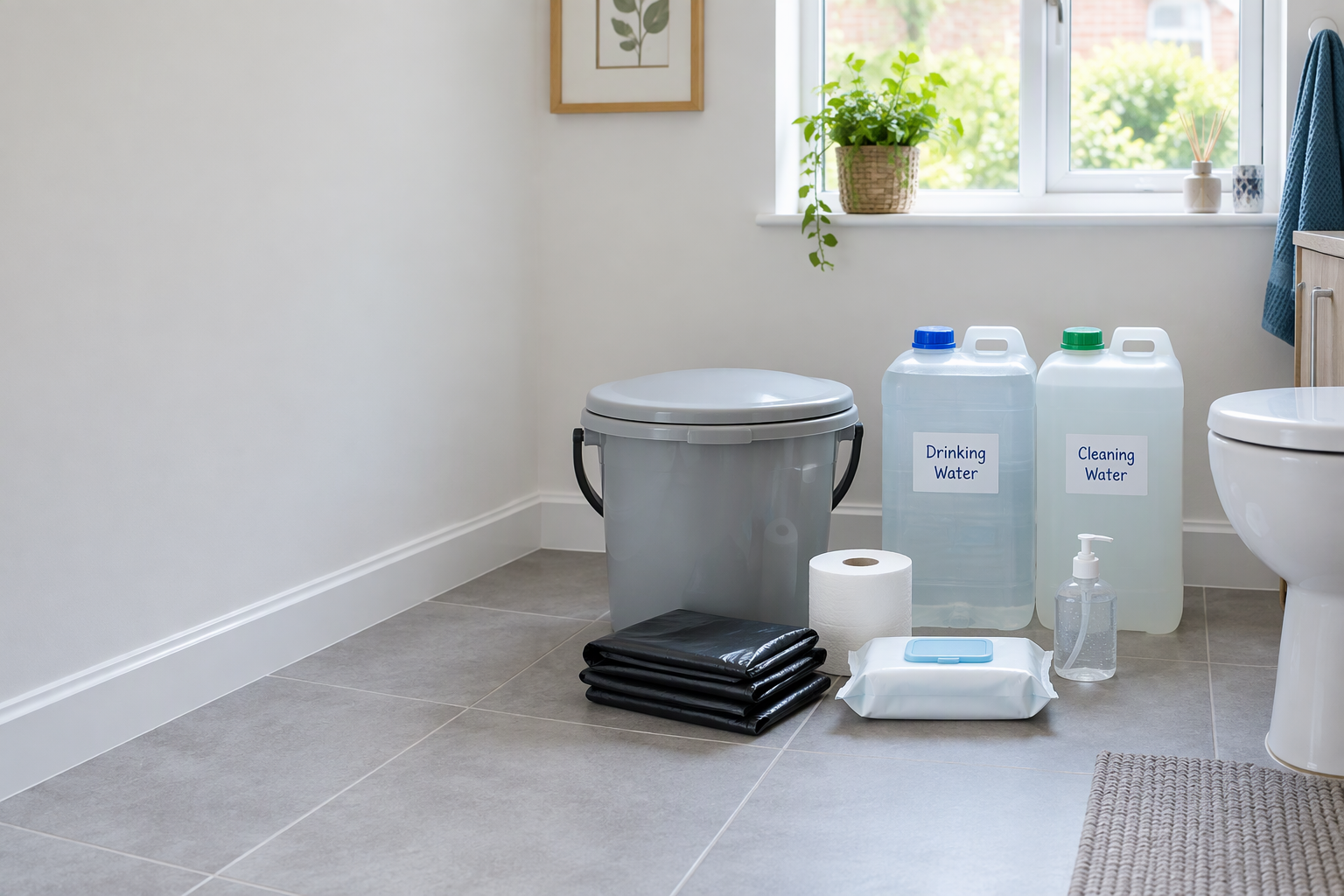
The simplest emergency toilet can be made from a strong, stable bucket with a secure lid. A purpose-built portable camping toilet is more comfortable, but a sturdy bucket can work for short-term use if it is prepared properly.
A basic setup includes:
- A strong bucket or portable toilet
- Heavy-duty, leak-resistant bags
- An absorbent material such as sawdust, wood pellets or suitable pet-litter material
- Toilet paper and wipes
- Hand sanitiser or a handwashing station
- Disinfectant suitable for the surfaces you are cleaning
- A tight-fitting lid or a second sealed container for used bags
Line the container before use. Add a small amount of absorbent material to the bottom of the liner, then add more after each use if needed. The purpose is to reduce liquid movement and help control odour.
Do not overfill the liner. Tie it securely before moving it, keep it away from children and pets, and follow local waste-collection guidance for disposal. Do not put human waste into recycling or garden-waste bins, and do not bury or burn it casually.
Keep drinking water separate from toilet water
One of the most important preparation habits is separating water by purpose.
Drinking water should be reserved for drinking, cooking, essential medicines and, where necessary, basic personal hygiene. Store it in clean, food-safe containers intended for water and label it clearly.
Utility water can be reserved for tasks such as bucket flushing, cleaning floors or rinsing equipment, provided it is suitable for that specific use. Never assume that rainwater, water from an ornamental pond or water from an unknown container is safe for people.
Separate labels prevent a tired household from using the wrong container during an outage. “Drinking water” and “Cleaning water” are simple labels that can make a real difference.
Storing water and toilet supplies in a UK home
UK homes vary from large houses with sheds to flats with one small kitchen cupboard. Your plan needs to fit the space you actually have.
Choose practical storage locations
Good locations include a cool, dark cupboard, a utility room, a secure under-stairs space or a protected section of a shed. Avoid placing heavy water containers high up where they could fall, and check that shelves can safely support their weight.
In flats, use low and stable storage locations that do not block exits, shared corridors or access to utility cupboards. A few smaller containers are often easier to move and inspect than one very large container.
Protect stored water
Keep water containers away from direct sunlight, strong heat sources and chemicals. Do not store them beside fuel, solvents, pesticides or cleaning products where a leak could contaminate the outside of the container or its cap.
Protect supplies from freezing. Water expands when it freezes, which can split containers and leave you with a leak when they thaw.
Inspect containers occasionally for damage, cloudiness, leaks or unusual smells. Follow the manufacturer's guidance for storage life and replacement, especially for commercially packaged water.
Build a compact toilet-supply box
Keep toilet supplies together in a clearly labelled plastic box or lidded container. A useful three-day kit might include:
- Heavy-duty bags and spare liners
- Absorbent material
- Toilet paper
- Wet wipes
- Hand sanitiser
- Disposable gloves
- Household disinfectant
- Paper towels or reusable cleaning cloths
- A torch or battery lantern
- Air freshener or odour-control material
- Cable ties or strong ties for sealing bags
- A bucket, portable toilet or suitable seat attachment
Store the box where every adult in the household can find it. If the supplies are split between several cupboards, write a short inventory and keep it somewhere visible.
Plan for limited storage space
If space is tight, prioritise items that solve several problems at once. Heavy-duty bags, absorbent material, hand sanitiser, gloves and disinfectant are more useful than buying a large collection of specialist gadgets.
A small flat may benefit from a collapsible portable toilet and a compact water container. A house with a shed may have more options, but supplies should still be protected from damp, freezing temperatures and pests.
Hygiene matters more than comfort
During a water outage, the main risks are contamination and poor hand hygiene. Wash hands with soap and water when possible. When water is limited, use hand sanitiser as a temporary measure, particularly after handling waste, and clean hands properly as soon as suitable water is available.
Clean high-touch surfaces regularly, including toilet seats, handles, taps, bucket lids and nearby floors. Keep toilet supplies separate from food and cooking equipment.
Ventilate the room where possible, while preserving privacy and security. Keep children and pets away from the emergency toilet and any sealed waste containers.
What not to do
Avoid these common mistakes:
- Using drinking water for every flush
- Continuing to flush when drains are blocked or sewage is backing up
- Using flimsy shopping bags that can split
- Filling liners until they are too heavy to move safely
- Storing cleaning chemicals beside drinking-water containers
- Leaving used waste bags open
- Putting human waste in recycling or garden-waste bins
- Burning plastic bags or waste
- Assuming rainwater is safe to drink
- Waiting until the outage starts before finding the supplies
A simple three-day toilet plan
Before an outage, decide which of these options applies to your home:
- Normal flushing: only if the water supply, drains and official guidance allow it.
- Bucket flushing: use suitable non-drinking water when the drainage system is working.
- Emergency toilet: use a lined bucket or portable toilet when flushing is unsafe or impossible.
Write the plan down. Tell everyone in the household where the supplies are and how the system works. A five-minute conversation before an outage is much easier than explaining it during a midnight plumbing emergency.
Your 72-hour essentials
Final checklist
For a short water outage, aim to have:
You do not need to turn your home into a bunker. You simply need a clean, realistic plan for the least glamorous problem in a water outage.
Final thoughts
When water is off for three days, the best toilet solution is the one your household can use safely, cleanly and without confusion. Store the right supplies, separate drinking water from utility water, understand when not to flush, and practise setting up your emergency option before you need it.
Preparedness is not about panic. It is about removing avoidable problems before they become urgent.
What would you add to a three-day emergency toilet kit? Share your practical tips in the comments, or use this checklist to prepare your own setup today.
This is general preparedness information. During a real incident, follow instructions from your local water company and local waste authority.
Join the conversation
From the community
Share your tips
What would you add to a three-day emergency toilet kit? Share a practical idea with other readers.
Loading comments…